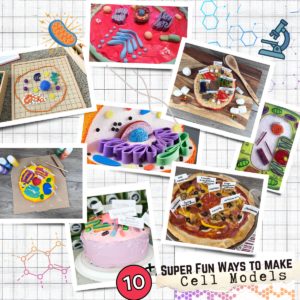
Whether your child needs a last-minute science project, wants to impress at the science fair, or simply learns best by building, making a cell model is one of the most memorable ways to explore biology. From edible cakes and cookies to LEGO creations, clay models, and printable projects, these ideas can help you choose the approach that fits your child’s age, learning style, and supplies you already have at home.
It doesn’t matter where they attend school – home, public, or private – at some point nearly every teen is going to take biology. When they do, the first thing they’ll likely study is the cell.
Don't be unsocialized! Click over to read the rest at Weird, Unsocialized Homeschoolers.
]]>
Learn how to make an edible cell model, using cake and candies, that looks as incredible as it tastes.
Making a cell model of some sort seems to be a universal rite of passage for middle and/or high school students. At some point during a biology unit, nearly every student is asked to build a model showing the parts of a cell. It’s one of those classic science assignments that shows up year after year in classrooms and homeschool science curricula.
Even if your science curriculum doesn’t assign a cell model project, you should consider doing one anyway.
Don't be unsocialized! Click over to read the rest at Weird, Unsocialized Homeschoolers.
]]>
Teaching History Through Mystery: Why the Amelia Earhart Mystery Captivates Young Minds
There is a moment in learning when a child stops asking, “Do I have to do this?” and starts asking, “Wait… what really happened?”
That moment is gold.
It is the difference between covering a subject and owning it. Between memorizing information and pursuing truth. Nothing creates that shift faster than a genuine unsolved mystery. The Amelia Earhart Mystery is not just an aviation story. It is a doorway into curiosity.
Children instinctively lean toward puzzles. They want a resolution.
Don't be unsocialized! Click over to read the rest at Weird, Unsocialized Homeschoolers.
]]>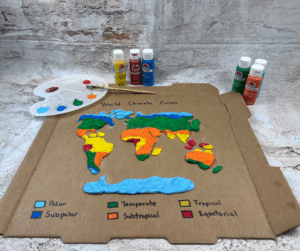
Try this easy salt dough map to learn more about world climate zones!
Have you ever wondered what the weather is like in other parts of the world—or which countries have similar climates to where you live? That’s where studying world climates (and using a climate zone map) comes in handy. You might be surprised to find out that places on opposite sides of the globe actually share similar weather patterns. And sometimes, the climate in a place isn’t at all what you’d expect!
If you’ve ever wished the world came with a giant “climate cheat sheet” to explain why it’s snowing in one place and scorching hot in another, well, good news—you (or your teens) are about to make one.
Don't be unsocialized! Click over to read the rest at Weird, Unsocialized Homeschoolers.
]]>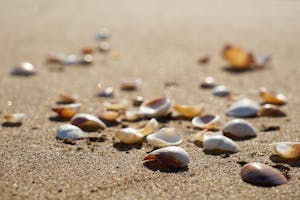
Want a fun summertime science project? Study chemical reactions with seashells that you've gathered at the beach with your kids.
Don't be unsocialized! Click over to read the rest at Weird, Unsocialized Homeschoolers.
]]>