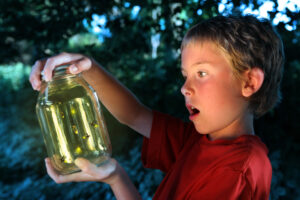
A child can complete every assignment and still never really connect with what they are learning.
That sentence may make us pause, and it should.
Completion matters. Skills matter. Discipline matters. We want our children to read well, write clearly, calculate accurately, think critically, and follow through when something is difficult.
But if our homeschool becomes only about finishing the next lesson, checking the next box, or getting through the next page, our children may start to believe learning is something to survive instead of something to pursue.
That is why it matters to cultivate wonder in your homeschool.
Don't be unsocialized! Click over to read the rest at Weird, Unsocialized Homeschoolers.
]]>
Learning Leads to More Learning
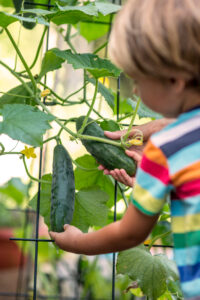
If you’ve never read The Secret Garden by Frances Hodgson Burnett, I highly recommend it for all children and parents. It is such a beautiful book about imagination, friendship, and the transformative power of caring for something beyond yourself. As Mary tends to the garden and learns about friendship, her heart and mind bloom in return. (Be sure not to miss the free Garden Unit Study and Lab workbook at the bottom of this article.)
It’s also a story that quietly asks a bigger question: what happens when you care for something long enough to watch it change?
Don't be unsocialized! Click over to read the rest at Weird, Unsocialized Homeschoolers.
]]>
Most history lessons are built around what is already known.
The outcome is clear.
The explanation is given.
The thinking has already been done.
Your child’s role is simply to learn it.
But the Mary Celeste mystery does not work that way.
Because the Mary Celeste mystery has no clear answer.
And that changes everything.
When the Mary Celeste Mystery Has No Ending
The Mary Celeste mystery is not remembered because of what happened.
It is remembered because no one can explain exactly what happened.
Don't be unsocialized! Click over to read the rest at Weird, Unsocialized Homeschoolers.
]]>
Most of the time, when we introduce a new math idea, we explain it first and then look for examples.
A Pi Day study works better the opposite way.
A Pi Day Study That Starts With Curiosity
You start with something ordinary and slightly puzzling and let kids notice the rule hiding inside it.
- No vocabulary.
- No formulas.
- No pressure to understand yet.
Just a question and a piece of string.
(Don’t miss the link to the printable unit study at the end of the article to reinforce their Pi study.)
Using Everyday Objects to Spark a Pi Day Discovery
Walk into the kitchen and put a jar on the table.
Don't be unsocialized! Click over to read the rest at Weird, Unsocialized Homeschoolers.
]]>
Teaching History Through Mystery: Why the Amelia Earhart Mystery Captivates Young Minds
There is a moment in learning when a child stops asking, “Do I have to do this?” and starts asking, “Wait… what really happened?”
That moment is gold.
It is the difference between covering a subject and owning it. Between memorizing information and pursuing truth. Nothing creates that shift faster than a genuine unsolved mystery. The Amelia Earhart Mystery is not just an aviation story. It is a doorway into curiosity.
Children instinctively lean toward puzzles. They want a resolution.
Don't be unsocialized! Click over to read the rest at Weird, Unsocialized Homeschoolers.
]]>